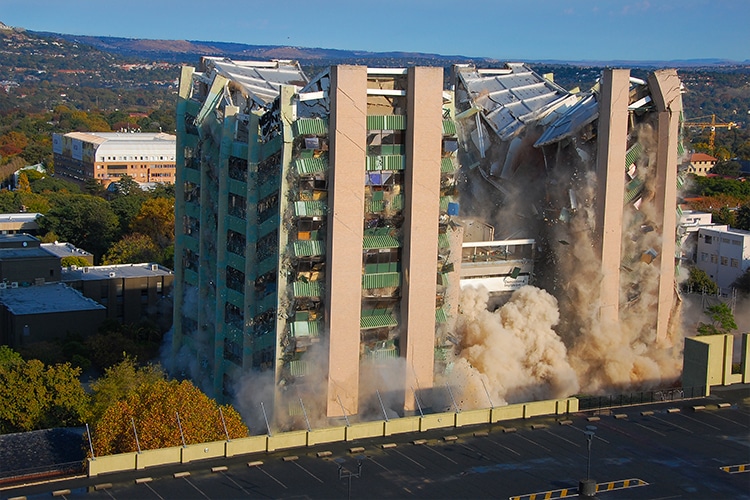
In large-scale building demolition, two primary methods are commonly used: explosives and machinery. Each approach has its own set of advantages and disadvantages, making it essential to evaluate the specific circumstances of a project before deciding on the most appropriate method. The choice between explosives and machinery depends on various factors ทุบตึกฟรี, including the size of the structure, the surrounding environment, safety concerns, cost, and the desired timeline for completion. Both methods are effective in their own right, but understanding their strengths and weaknesses is key to selecting the best option for a given demolition project.
Explosive demolition, often referred to as “controlled demolition” or “implosion, ” involves strategically placing explosives throughout a building to collapse it in a controlled manner. This method is particularly effective for large, complex structures, such as high-rise buildings or industrial plants, where traditional demolition methods might be time-consuming or impractical. One of the biggest advantages of explosive demolition is speed. The entire building can be brought down in a matter of seconds, which makes it a highly efficient choice for projects with tight timelines. Explosives also tend to create a more predictable collapse, which can be particularly advantageous in densely populated areas where minimizing collateral damage is critical. The use of explosives can help reduce the amount of debris and make the site ready for redevelopment more quickly than some other demolition methods.
However, explosive demolition also has significant drawbacks. The most obvious concern is safety. Even with careful planning, the use of explosives presents a high level of risk to workers, nearby buildings, and the general public. Extensive safety measures must be taken to ensure that no one is within the blast radius, and surrounding areas may need to be evacuated, which can cause disruptions to daily life. Another challenge is the potential environmental impact. Explosives generate dust and debris that can be harmful to the surrounding environment, especially if the building contained hazardous materials like asbestos or lead. Additionally, there is the risk of damaging nearby structures, even if they are not within the direct blast area. As a result, explosive demolition is typically reserved for situations where machinery-based methods would be too slow or inefficient.
On the other hand, machinery-based demolition involves the use of heavy equipment like excavators, bulldozers, cranes, and wrecking balls to manually dismantle a building piece by piece. This method is more versatile than explosive demolition and can be employed in a wider range of scenarios, from small residential buildings to large commercial structures. One of the main advantages of machinery-based demolition is its safety profile. While heavy machinery does pose risks to workers and the surrounding environment, it is generally considered to be a safer option than explosives, as there is less chance of an uncontrolled collapse or damage to nearby properties. Furthermore, this method allows for more precise control over the demolition process, which is particularly important when working in urban areas or close to other structures.
Machinery-based demolition also tends to be more environmentally friendly than explosives, as it generates less dust and noise. Workers can carefully dismantle the building, recycling materials such as steel, concrete, and wood, which reduces waste and supports sustainable construction practices. This approach also allows for the removal of hazardous materials like asbestos before the demolition process begins, minimizing the risk of exposure. However, machinery-based demolition is a slower process compared to explosives. Depending on the size and complexity of the building, it can take weeks or even months to fully dismantle the structure, which can be a disadvantage for projects that need to be completed quickly. Additionally, the cost of hiring heavy machinery and the labor required for this type of demolition can be more expensive than explosives, especially for large projects.
Both methods have their unique sets of pros and cons, and the decision on which to use ultimately depends on the specifics of the demolition project. Explosive demolition is often favored for large-scale projects where speed and efficiency are paramount, such as the demolition of high-rise buildings in urban centers. However, it is not always suitable for smaller buildings or areas with a high risk of collateral damage. Machinery-based demolition, while slower and sometimes more expensive, is a safer and more controlled approach, especially for projects where precision is needed or when environmental concerns are a priority. In some cases, a combination of both methods may be used, with explosives bringing down the main structure and machinery handling the cleanup and final dismantling of remaining parts.
In conclusion, the choice between explosives and machinery for demolition depends on several factors, including the size of the building, the surrounding environment, safety concerns, and project timelines. Explosives are ideal for large, complex structures that need to be brought down quickly, while machinery provides a safer and more controlled option, particularly for smaller or more sensitive projects. Both methods have their advantages and challenges, and understanding these can help ensure that the demolition is carried out efficiently, safely, and with minimal environmental impact. Ultimately, the best method will depend on the specific requirements and constraints of the demolition project at hand.